Adobe Express includes AI-powered text-to-speech capabilities that allow users to convert written text into realistic spoken audio. This feature is useful for creating narrated videos, social media content, educational materials, marketing videos, presentations, product demonstrations, and training content without recording your own voice.
Instead of using a microphone, you simply type or paste text, choose a voice, and Adobe Express generates an audio narration that can be added directly to your project.
In this guide, you’ll learn how to use text-to-speech in Adobe Express and create professional voiceovers in minutes.
Quick Answer
To use text-to-speech in Adobe Express:
- Open Adobe Express.
- Create a video project.
- Add your text script.
- Open the Text-to-Speech feature.
- Select a voice.
- Generate the narration.
- Preview the audio.
- Add it to your project.
- Export the finished video.
The process requires no microphone or voice recording equipment.
What Is Text-to-Speech?
Text-to-speech (TTS) uses artificial intelligence to convert written words into spoken audio.
Instead of recording narration manually, the software creates a synthetic voice that reads the text.
Common uses include:
- YouTube videos
- Social media content
- Product demonstrations
- Educational videos
- Marketing campaigns
- Explainer videos
Why Use Text-to-Speech?
Text-to-speech offers several advantages.
Faster Content Creation
No need to record audio.
Consistent Voice Quality
Every narration sounds clear and professional.
No Recording Equipment Required
Useful for creators without microphones.
Multiple Voice Options
Choose different speaking styles and tones.
Easy Editing
Simply change the text and regenerate the voice.
Step 1: Open Adobe Express
Sign in to Adobe Express and create a new project.
Text-to-speech is most commonly used within:
- Video projects
- Presentations
- Animated content
Adobe Express works on:
- Windows
- Mac
- Chromebook
- iPhone
- iPad
- Android
Step 2: Create or Open a Video Project
Select:
Video
or open an existing video project.
Text-to-speech is typically used to create narration for video content.
Step 3: Prepare Your Script
Write the text you want the AI voice to read.
Example
“Welcome to our product demonstration. In this video, we’ll show you how our solution can save time and improve productivity.”
Keep sentences clear and concise.
Tips
- Use natural language.
- Avoid very long paragraphs.
- Break content into smaller sections.
Step 4: Open Text-to-Speech
Locate the audio or media tools within Adobe Express.
Depending on the version, you may see options such as:
- Text to Speech
- AI Voice
- Generate Voiceover
Select the feature to begin.
Step 5: Enter Your Text
Paste or type your script into the text field.
Adobe Express will use this content to generate the spoken narration.
Best Practice
Review spelling and punctuation before generating audio.
The AI uses punctuation to determine pauses and sentence flow.
Step 6: Choose a Voice
Adobe Express typically offers multiple voice options.
Examples may include:
Male Voices
Suitable for:
- Business videos
- Tutorials
- Product demos
Female Voices
Suitable for:
- Educational content
- Marketing videos
- Narration
Different Accents
Depending on availability, various regional accents may be offered.
Select the voice that best fits your audience.
Step 7: Generate the Audio
Click:
Generate
Adobe Express will process the text and create a voice narration.
This usually takes only a few seconds.
Step 8: Preview the Narration
Listen carefully to the generated audio.
Check for:
Pronunciation
Ensure names and technical terms sound correct.
Pacing
Confirm the speech speed feels natural.
Tone
Verify that the voice matches your content style.
If necessary, edit the text and regenerate.
Step 9: Add the Audio to Your Project
Once satisfied:
- Insert the narration into your video timeline.
- Align it with images and video clips.
- Adjust timing if needed.
The narration becomes part of the project.
Step 10: Add Background Music (Optional)
Many creators combine text-to-speech with background music.
Benefits
- More engaging videos
- Better audience retention
- Professional presentation
Keep music volume lower than the narration.
Step 11: Export the Finished Video
When everything is complete:
- Click Download.
- Choose MP4.
- Export the project.
The final video will include the generated narration.
Best Uses for Text-to-Speech
YouTube Videos
Create narrated explainers and tutorials.
Social Media Content
Generate voiceovers for:
- Instagram Reels
- TikTok videos
- Facebook content
- LinkedIn posts
Educational Materials
Create lessons and training videos.
Product Demonstrations
Explain features and benefits clearly.
Business Presentations
Add narration to presentations and reports.
Tips for Better AI Narration
Write Conversationally
AI voices sound more natural when the script resembles everyday speech.
Use Short Sentences
This improves pacing and clarity.
Add Punctuation
Periods and commas help create natural pauses.
Avoid Large Blocks of Text
Break long scripts into smaller sections.
Test Multiple Voices
Different voices may suit different audiences.
Common Problems and Solutions
Voice Sounds Too Fast
Shorten sentences and add punctuation.
Pronunciation Errors
Try rewriting difficult words phonetically.
Narration Feels Robotic
Use more natural sentence structures.
Audio Doesn’t Match Video Timing
Adjust the placement of clips on the timeline.
Adobe Express vs Manual Voice Recording
Text-to-Speech
Advantages:
- Fast
- Consistent
- No microphone needed
- Easy to edit
Manual Voice Recording
Advantages:
- More personality
- Emotional expression
- Unique brand voice
Many creators use a combination of both methods.
AI Technology Behind Text-to-Speech
Adobe Express leverages AI technologies to generate realistic voiceovers.
Some AI-powered features within Adobe Express are enhanced by:
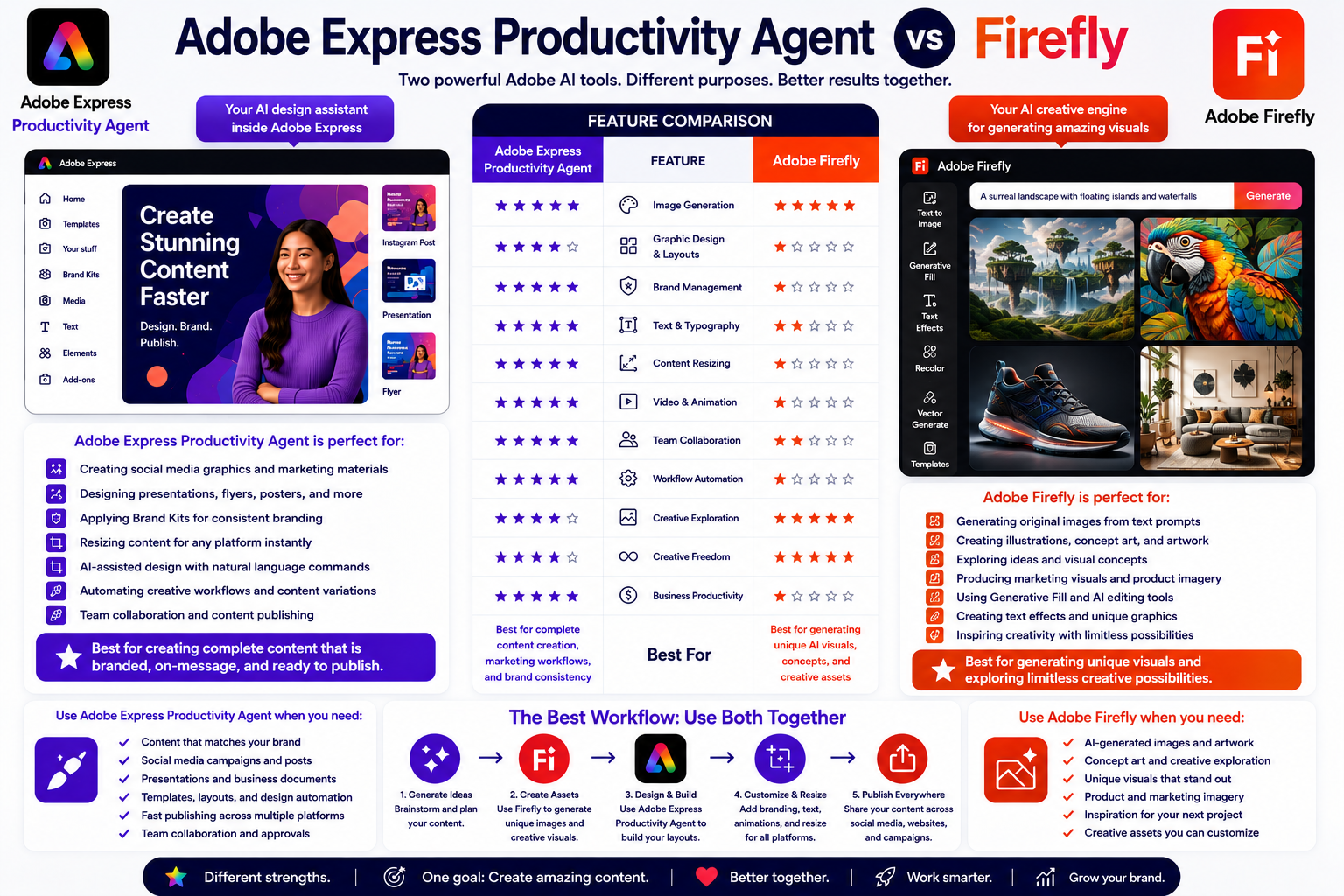
Adobe Firefly
which helps streamline content creation workflows.
Frequently Asked Questions
Does Adobe Express have text-to-speech?
Yes. Adobe Express includes AI-powered text-to-speech capabilities for generating voiceovers.
Can I create video narration without recording my voice?
Yes. Text-to-speech allows you to generate narration from written text.
Can I choose different voices?
Yes. Adobe Express typically offers multiple voice options.
Can I use text-to-speech for YouTube videos?
Yes. It is commonly used for tutorials, explainers, and promotional content.
Can I add music to AI-generated narration?
Yes. Background music can be combined with text-to-speech voiceovers.
Final Answer
To do text-to-speech in Adobe Express, create a video project, enter your script into the Text-to-Speech feature, choose an AI voice, generate the narration, and add the resulting audio to your timeline. Adobe Express makes it easy to create professional voiceovers without recording equipment, making it an excellent tool for social media videos, educational content, presentations, product demonstrations, and marketing campaigns.