DPI (Dots Per Inch) is an important concept when preparing images and designs for printing. A higher DPI generally produces sharper printed output, while lower DPI settings are often sufficient for digital use such as websites, social media, and online marketing.
If you’re using Adobe Express, you may wonder how to adjust the DPI of your designs before exporting them. Unlike professional print-focused applications such as Adobe InDesign or Adobe Photoshop, Adobe Express focuses on simplicity and does not provide a direct DPI setting that users can manually change.
In this guide, you’ll learn how DPI works in Adobe Express and the best ways to prepare high-quality files for both digital and print use.
Quick Answer
Adobe Express does not currently offer a direct DPI setting.
To achieve higher-quality output:
- Start with a large canvas size.
- Use high-resolution images.
- Export as PDF for printing.
- Choose the highest available quality settings.
- Verify requirements with your print provider.
The final print quality is primarily determined by image dimensions and export settings rather than a manual DPI control.
What Is DPI?
DPI stands for:
Dots Per Inch
It measures how many printed dots fit within one inch of paper.
Example
72 DPI
Common for web graphics.
300 DPI
Common for professional printing.
Higher DPI generally results in sharper printed images.
Why DPI Matters
DPI affects print quality.
Low DPI
May appear blurry or pixelated when printed.
High DPI
Produces sharper, more detailed prints.
Digital Displays
Typically rely on pixel dimensions rather than DPI.
For social media and websites, DPI is often less important than image size.
Does Adobe Express Have a DPI Setting?
Currently, Adobe Express does not provide a dedicated DPI control.
You cannot directly choose:
- 72 DPI
- 150 DPI
- 300 DPI
- 600 DPI
within the export settings.
Instead, Adobe Express focuses on:
- Canvas size
- Resolution
- Export format
- Image quality
These factors determine the final output quality.
How Adobe Express Handles Resolution
Adobe Express automatically manages image resolution during export.
The exported file quality depends on:
Canvas Dimensions
Larger designs contain more pixels.
Source Images
High-resolution images produce better results.
Export Format
PDF and PNG often preserve more detail.
Scaling
Avoid excessive enlargement after export.
Method 1: Create a Larger Design
One of the easiest ways to improve print quality is to start with a larger canvas.
Example
Instead of:
1200 × 1200 pixels
Use:
3000 × 3000 pixels
or larger.
More pixels generally lead to better print results.
Method 2: Use High-Resolution Images
The quality of imported images matters.
Recommended
- High-resolution photos
- Professional stock images
- Large PNG graphics
Avoid
- Small screenshots
- Compressed web images
- Low-quality downloads
High-quality source files improve final output.
Method 3: Export as PDF
For print projects:
Step 1
Click:
Download
Step 2
Choose:
PDF files typically preserve quality better than JPG exports.
Print shops often prefer PDFs.
Method 4: Export as PNG
PNG files are useful when:
- Transparency is required
- Maximum image quality is needed
- Graphics contain text
PNG generally preserves more detail than JPG.
Method 5: Avoid Enlarging After Export
One common mistake is exporting a design and then enlarging it later.
Example
Export:
1000 × 1000 pixels
Then enlarge to:
5000 × 5000 pixels
This reduces quality significantly.
Always design at the size you need.
Understanding DPI vs Pixels
Many users confuse DPI and pixels.
DPI
Print density.
Pixels
Actual image dimensions.
Example:
3000 × 3000 pixel image
may print well at 300 DPI.
The pixel dimensions often matter more than the DPI value itself.
Common Print DPI Standards
72 DPI
Web graphics.
150 DPI
Basic printing.
300 DPI
Professional printing.
600 DPI
High-end commercial printing.
Most print shops recommend 300 DPI equivalent output.
Preparing Flyers for Printing
When creating flyers:
Use Large Dimensions
Ensure adequate resolution.
Export as PDF
Preferred by most printers.
Verify Specifications
Check printer requirements before exporting.
Preparing Posters for Printing
Posters often require:
Large Canvas Sizes
Support larger print dimensions.
High-Quality Images
Avoid pixelation.
PDF Export
Maintain detail.
Posters reveal resolution problems more easily than smaller prints.
Preparing Business Cards
Business cards require sharp text and graphics.
Best Practices
- Use large source assets
- Export as PDF
- Verify dimensions carefully
Small printed materials demand precise quality.
How to Check Image Resolution
Before uploading images:
Review:
Pixel Dimensions
Example:
4000 × 3000 pixels
File Quality
Avoid heavily compressed images.
Higher-resolution assets generally produce better prints.
Best Practices for High-Quality Exports
Start Large
Design at a larger size.
Use High-Resolution Assets
Maintain quality throughout the project.
Export as PDF
Preferred for printing.
Avoid Repeated Re-Exports
Repeated compression can reduce quality.
Test Print Samples
Verify quality before large print runs.
Common DPI Mistakes
Using Small Images
Leads to blurry prints.
Enlarging Files After Export
Reduces quality.
Ignoring Print Requirements
Can cause production issues.
Using Screenshots
Often too low resolution.
Assuming DPI Is Everything
Pixel dimensions are equally important.
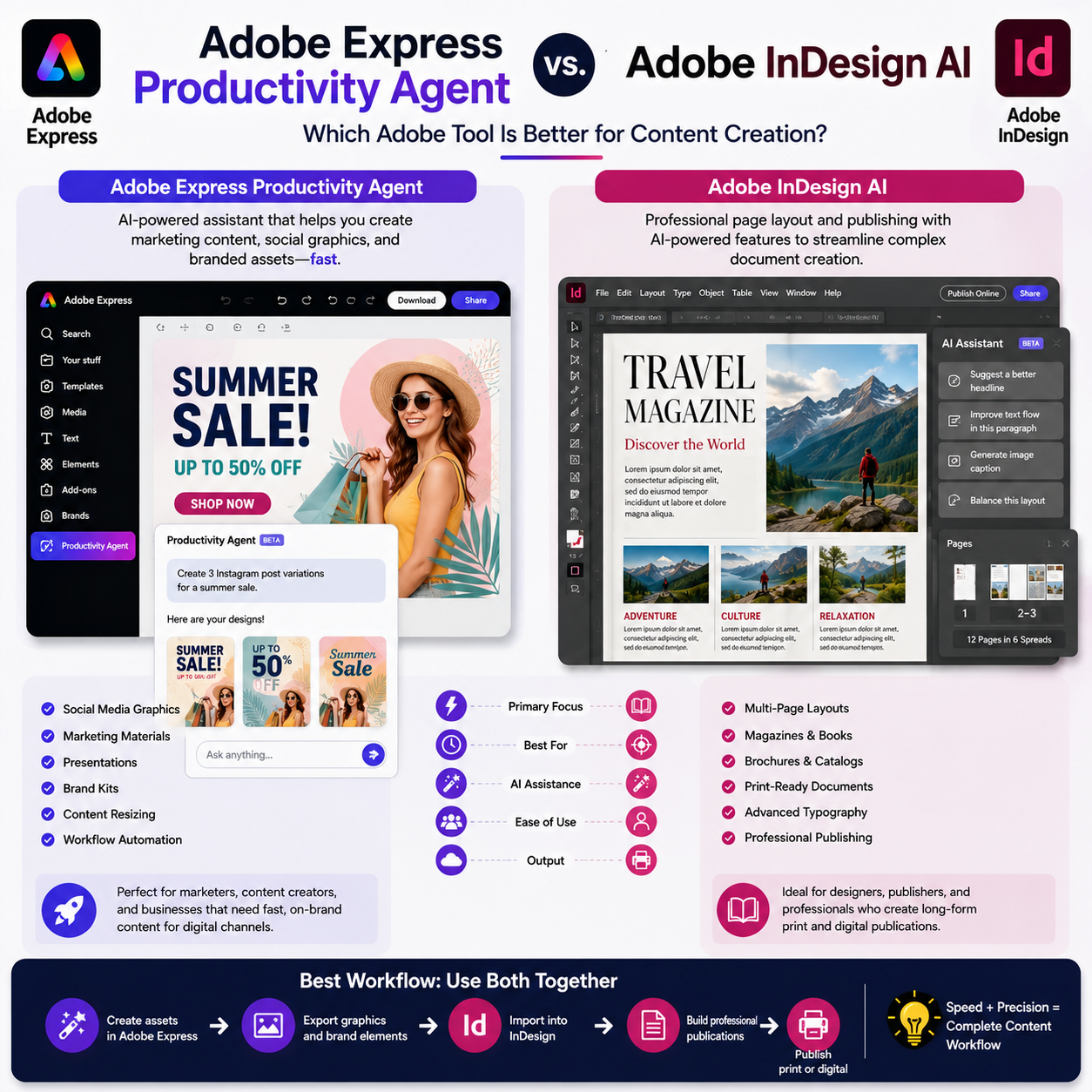
Adobe Express vs Photoshop for DPI Control
Adobe Express focuses on:
- Simplicity
- Quick design creation
- Easy exports
- Marketing content
For detailed print preparation, professionals often use:
Adobe Photoshop
which provides:
- Direct DPI settings
- Print resolution controls
- Advanced export options
Adobe InDesign
which provides:
- Professional print workflows
- Bleed settings
- Print-ready PDFs
- Commercial publishing tools
Adobe Express is designed for speed and accessibility rather than advanced print production.
Frequently Asked Questions
Can I change DPI directly in Adobe Express?
No. Adobe Express does not currently provide a manual DPI setting.
How can I improve print quality?
Use large canvas dimensions, high-resolution images, and PDF exports.
Is 300 DPI available in Adobe Express?
There is no direct 300 DPI setting, but properly sized designs can achieve print-quality results.
Should I export as PDF or JPG for printing?
PDF is generally preferred for professional printing.
Does DPI matter for social media graphics?
Not usually. Pixel dimensions are more important for digital content.
Final Answer
Adobe Express does not currently allow users to manually change DPI settings. Instead, the best way to achieve high-quality output is to use large canvas dimensions, import high-resolution images, and export designs as PDF or high-quality PNG files. For most print projects, properly sized Adobe Express designs can produce excellent results, even without direct DPI controls.